
![BOSTAN TREE logo [all white].png](https://static.wixstatic.com/media/22594c_ef349d8657ab4cd192d4728d0a0c511d~mv2.png/v1/fill/w_222,h_219,al_c,q_85,usm_0.66_1.00_0.01,enc_avif,quality_auto/BOSTAN%20TREE%20logo%20%5Ball%20white%5D.png)
Wine economy in Byzantine Shivta (Negev, Israel): Exploring the role of runoff agriculture and droughts through Agent-Based Modeling
- Shiri Barnhart
- Jul 10, 2025
- 1 min read

Updated: Feb 22
PLOS One, July 10, 2025
Barak Garty, Gil Gambash, Sharona T. Levy, Guy Bar-Oz
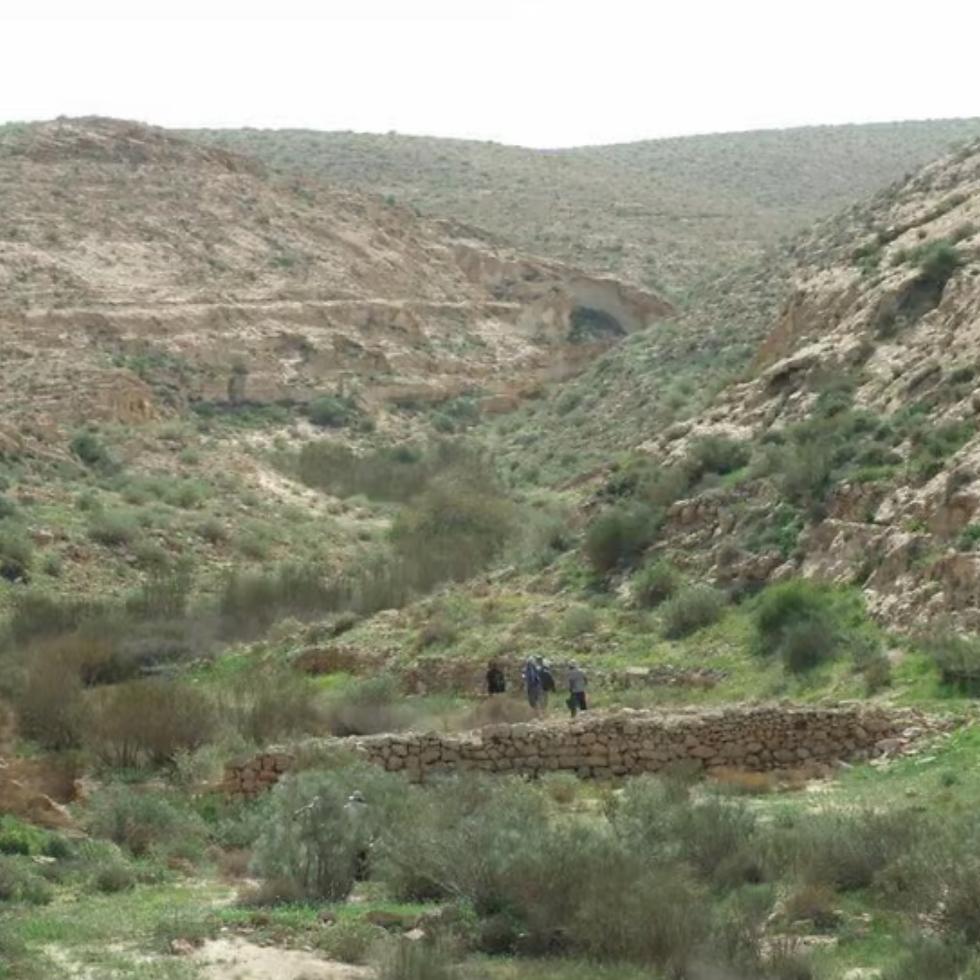
The article discusses how innovative dryland farming techniques, such as runoff harvesting systems, terraces, and pigeon towers, enabled intensive grape cultivation and a thriving wine export economy in the Byzantine era Negev desert. The study focuses on the resilience and adaptability of viticulture in the Shivta hinterland, analyzing how climatic challenges like aridification and drought tested Byzantine water management strategies. Developed in NetLogo, an AGENTS model integrates various components to simulate viticulture dynamics in the local watershed, calculating water availability, crop yields, and labor costs. The results depict how higher runoff ratios improve yield efficiency, while excessive runoff ratios diminish productivity. The study highlights the importance of effective water management in sustaining agriculture in challenging environments offering insights to other regions and historical contexts beset with increasing environmental vulnerability.
Click here to continue reading



Comments